For a quality-focused PCB maker, getting the reflow soldering process right is the foundation for a strong solder joint and reliable electrical performance. Think about it: how does a tiny solder point turn into a steady electrical bridge under high heat? We will get into every stage of the process to show you how it works.
1.Picking the Right Solder Paste
This is where reflow begins. It is the single biggest factor for a good soldering yield. Solder paste combines alloy particle and flux. There is no one-size-fits-all ratio; the mix depends on the specific job and alloy type.
How Particle and Flux Work?
Think about the size: a solder alloy micro-particle is usually only 20 to 50 microns wide. This tiny grain sets the melting point, how well the metal wets the surface, and how strong the final bond is. Take the lead-free standard, SAC305 (96.5% tin, 3% silver, 0.5% copper). It melts between 217 and 220°C. Surrounding these particles is the flux—a chemically active medium. Why is it there? It cleans away oxide, cuts surface tension, and stops more oxide from forming as things heat up. This lets the liquid metal flow and create a tough physical bond.
What to Look For?
Do not just read the data sheet. A pro looks at these key factors:
- Alloy System: Decide between an easy, cheap tin-lead alloy or a lead-free option with a high melting point.
- Flux Activity: Use high-activity flux for a heavy oxide layer or a high-strength need. A clean surface only needs a low-activity mix.
- Particle Size: Type 3 (25-45 microns) and Type 4 (20-38 microns) are the go-to choices. A smaller grain means better precision and fewer voids, but it also rusts faster.
- Flow and Viscosity: The paste must work with the printer. It needs good thixotropy. This means it flows to fill the stencil when pushed but stays put once the pressure is off so it does not slump.
- Heat Stability: The paste has to survive the climb from preheat to reflow. If it is weak, the flux dries out too fast, leaving behind a solder ball or a bad joint.
- Material Match: Watch out for a brittle joint or poor wetting. The paste must get along with the PCB surface finish (like OSP or ENIG) and the component lead. This keeps the intermetallic compound (IMC) layer healthy.
2.Placing the Component
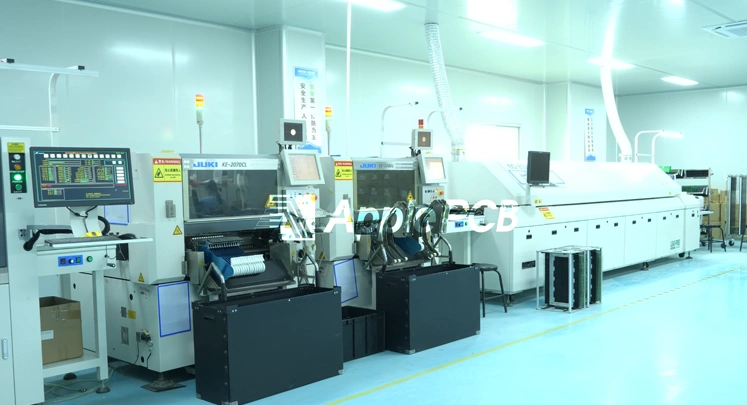
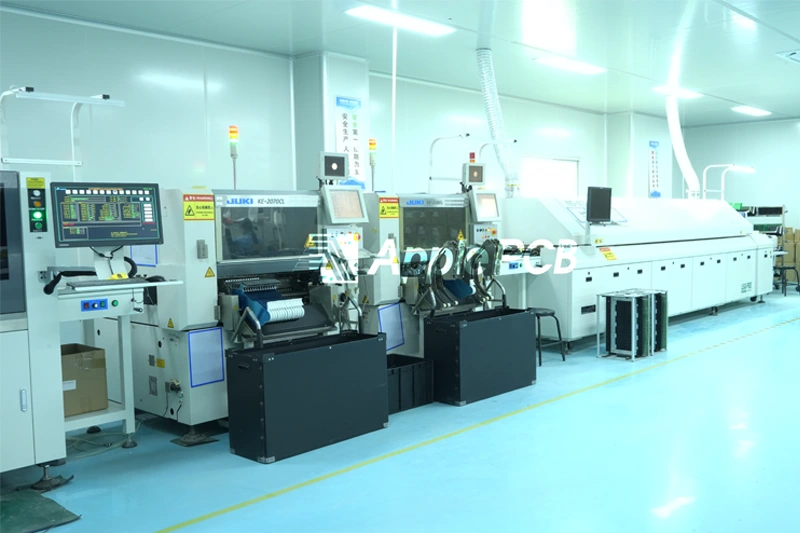
Once the paste is set, a high-speed Pick and Place machine drops resistor, capacitor, and IC onto the pad with pinpoint accuracy. Precision is the name of the game here. If a part is even slightly off-center, the solder melts at different speeds on each side. This creates a tug-of-war with surface tension, leading to "tombstoning"—where the component literally stands up on one end. A top-tier system keeps this error under 1mm.
ApplePCB Equipment Standard
At ApplePCB, we do not leave reflow stability to chance. We use high-spec hardware to wipe out variables in a complex build. Every reflow oven we use features three built-in tools:
Chain Conveyor and Center Support
We use a chain-style edge conveyor for automated, double-sided assembly. For a large or heavy board, the machine adds automatic center support. Why? Because under high heat, a PCB gets soft. This support keeps the board from sagging.
Closed-Loop Fan Control
A tiny component is light. If the air hits it too hard during reflow, it moves. Our machine uses a closed-loop system to track and tweak fan speed in real-time. This keeps heat transfer high without blowing a part out of place.
Automatic Width Adjustment
To handle different board types and cut out human error, our track and support adjust width automatically. The program tells the machine exactly where to go, ensuring a perfect fit every time.
3.The Preheat Stage: Stepping up the Heat
The goal here is simple: raise the temperature of the PCB assembly at a steady pace. Keep the heat climb at 2°C per second or less. Why? Because if the heat jumps too fast, the solvent in the solder paste will pop and splash. This creates a tiny solder ball or bead around the pad. If a metal particle stays in a circuit gap, the board fails. Also, a sudden heat spike can crack a sensitive part like a ceramic capacitor.
4.The Soak Stage: Finding the Balance
The soak lasts 60 to 120 seconds. The main job is to reach thermal equilibrium. This lets every component—no matter the size or heat capacity—start at the same temperature. This is also when the flux gets to work. If the heat is off, the flux dries out too soon. The result? A "Head-in-Pillow" defect or a joint that just won't wet. A smooth temperature profile is the only way to make sure the flux cleans away every bit of oxide before the real heat hits.
5.The Reflow Stage: The Main Event
This is the peak of the job. The oven pushes the heat past the melting point. Solder alloy turns into liquid. An engineer must set the peak temperature just right. It has to be hot enough to melt the paste, but not so hot it kills a part.
Keep the "Time Above Liquidus" (TAL) between 30 and 60 seconds. Think about it: too short, and the solder does not wet the pad, causing a weak joint. Too long, and the Intermetallic Compound (IMC) layer grows too thick. This makes the joint brittle and can even char the PCB substrate.
To get a better result, ApplePCB uses a nitrogen environment. By pumping in high-purity N2, the machine keeps oxygen out. A low-oxygen zone stops oxidation and helps the solder spread. It costs more, but it fixes the "Head-in-Pillow" issue and makes a joint look bright. It is worth it.
6.The Cooling Stage: Setting the Bond
Once the soldering is done, the board must cool at 2 to 4°C per second. The cooling speed sets the grain structure of the joint. Fast cooling creates a fine grain, which makes the bond strong and helps it resist fatigue. But do not go too fast. If the rate hits 6°C per second, the joint might snap or the package could peel. This happens because each material has a different rate of expansion.
Final Thought
Everything ApplePCB does happens for a single goal. The team ensures a design moves from a mere blueprint to a real, dependable PCB after it survives a trip through that 40-foot reflow oven. If your project needs a partner that knows the tech and understands every delivery detail, hand the next challenge over. From prototype PCB to large mass production, ApplePCB is ready.