In the early stages of hardware R&D, almost every engineer runs into the same headache: how much does prototype pcb assembly cost? You send out RFQs to a few fabricators, only to get back a stack of confusing, wildly different quotes. Suddenly, managing your project budget feels like opening a blind box.
On the factory floor, prototype assembly operates under a completely different financial logic than high-volume manufacturing. Because quick-turn PCBA runs involve low quantities, highly customized component mixes, and unique machine setups, you cannot look at them through a mass-production lens.
To help you budget predictably, ApplePCB is pulling back the curtain on the assembly floor. Here is a deep dive into the core drivers behind prototype PCBA costs, where your money actually goes, and how smart design choices can strip out unnecessary expenses.
PCB Footprint and Component Density
Beyond components and solder paste, the actual footprint and crowdedness of your board act as hidden levers that shift assembly costs. This cost driver splits into two distinct, interconnected metrics:
- Physical Surface Area: The X and Y dimensions of your PCB dictate raw material consumption and production line complexity. For instance, a tiny PCB destined for a smartwatch pulls a fraction of the raw laminate cost required by a desktop motherboard or a massive industrial control unit. Furthermore, smaller boards are often easier to handle, secure, and transport along automated conveyor systems, keeping baseline tooling costs minimal.
- Component Density: Total surface area matters, but how tightly you pack components onto that real estate often plays a more decisive role in your final invoice. If a layout squeezes hundreds of miniature components into a tight envelope, the factory must route the job to high-end, high-precision pick-and-place lines. The operator will purposely slow down the feeder and placement heads to protect yield, and the run will require advanced optical alignment (AOI) and rigorous manual QA. Pushing process tolerances to the limit like this always translates into an assembly premium during a prototype run.
Solder Paste
When drafting a prototype assembly budget, many teams overlook solder paste, treating it as a minor production consumable. In reality, the chemical and physical makeup of your solder paste dictates the long-term reliability of every joint on the board. On the production floor, solder paste options—and their corresponding price tags—generally fall into two tiers:
- High-End Solder Paste ($40 to $80 per jar): These premium pastes feature a highly uniform alloy particle distribution coupled with advanced flux chemistry. They offer exceptional thermal stability and wetting action at high temperatures. Running a complex PCB with a premium paste drastically cuts down on common assembly defects like solder bridging, cold joints, and micro-voiding inside the joints.
- Standard/Economy Lead-Free Solder Paste ($20 to $50 per jar): This is the workhorse material for general manufacturing. It offers excellent value and keeps production costs low. While it might lack the extreme thermal stability needed for dense, high-power circuitry or tight pitch BGAs, its performance is perfectly adequate for standard consumer goods, toys, or basic, low-risk prototypes built strictly for early functional validation. If the goal is simply verifying a basic circuit, an economy paste keeps costs down without sacrificing the test.
Prototype PCB Assembly Technique
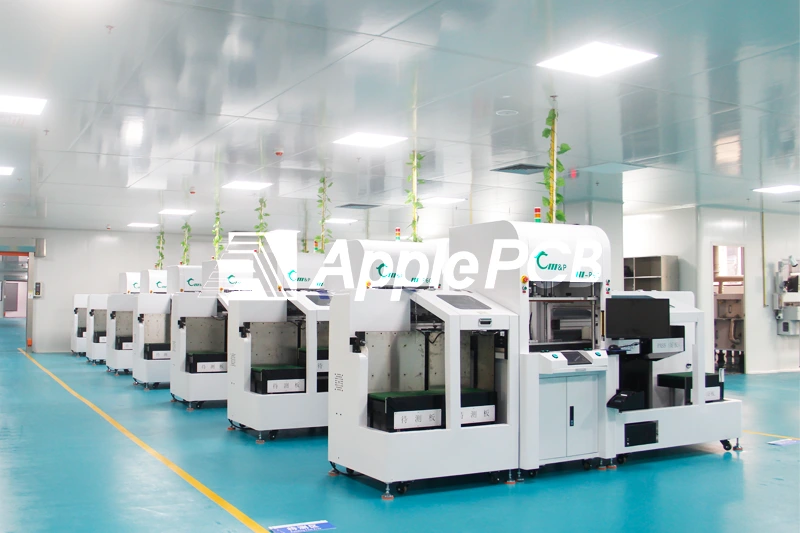
| Type | Cost Estimation | Scene |
| Automated SMT Machinery | $0.001 – $0.02 | Mass production, standard surface-mount components |
| Precision Hand-Mounted SMT | $0.03 – $0.08 | Very small-quantity engineering prototypes, irregularly shaped or non-standard components |
| Through-Hole (Wave) | $0.02 – $0.05 | Connectors and high-power, heavy-duty components in mass production |
| Manual Double-Sided THT | $0.05 – $0.15 | Low-volume mixed-voltage boards, filling in soldering blind spots |
| Hybrid Assembly Technology (SMT + THT) | Add 20-40% | When two types of technology coexist on a single board |
Beyond standard SMT and THT, advanced packaging technologies like Ball Grid Arrays (BGAs) and Chip Scale Packages (CSPs) represent a massive shift in assembly complexity. These high-density chips feature massive pin counts, with the electrical connections buried completely underneath the silicon body in a grid of microscopic solder spheres.
Assembling these devices requires specialized, ultra-precise pick-and-place systems to guarantee perfect alignment. Once the board exits the reflow oven, operators cannot visually inspect the connections. The factory must route the assembly through a specialized automated X-ray inspection (AXI) machine to peer inside the joints, checking for hidden bridging, open connections, or micro-voiding beneath the component.
Because advanced packaging demands specialized production machinery and rigorous, non-destructive quality control steps, incorporating these devices into a layout represents the highest assembly cost driver across all component categories.
Production Volume
Among all the variables that dictate your final assembly invoice, order volume has the most immediate effect on marginal cost. This is the classic rule of "economies of scale" playing out on the factory floor.
On a PCBA line, whether you are running a prototype batch of 10 boards or a mass-production order of 1,000, the fixed upfront engineering overhead remains exactly the same. The factory must still perform data preparation and DFM audits, program the pick-and-place feeders, laser-cut the SMT stencil, and configure the conveyor rails.
When you increase your order volume, these fixed setup charges are amortized across a much larger number of units. This dilution of upfront engineering costs is the primary reason the average assembly cost per board drops dramatically as you transition from prototyping to volume production.
| Production Capacity | Estimate Cost Per Board Assembly | Application |
| Engineering Prototypes (1–10 pieces) | $50 – $200+ | Functional Design Verification (DV), sample testing, investor demonstration |
| Small batch production (10–100 units) | $20 – $80 | System-level reliability testing; delivery to initial seed customers |
| Medium size (100–1,000 units) | $10 – $50 | The product has been officially released, and the market is experiencing a gradual increase in adoption |
| Large-scale production (1,000–10,000 units) | $5 – $25 | Mature, standardized products that have been finalized in terms of specifications and distribution channels. |
| Mass production (over 10,000 units) | $2 – $15 | Consumer electronics products; hardware projects designed for mass production |
Testing and Quality Control Levels
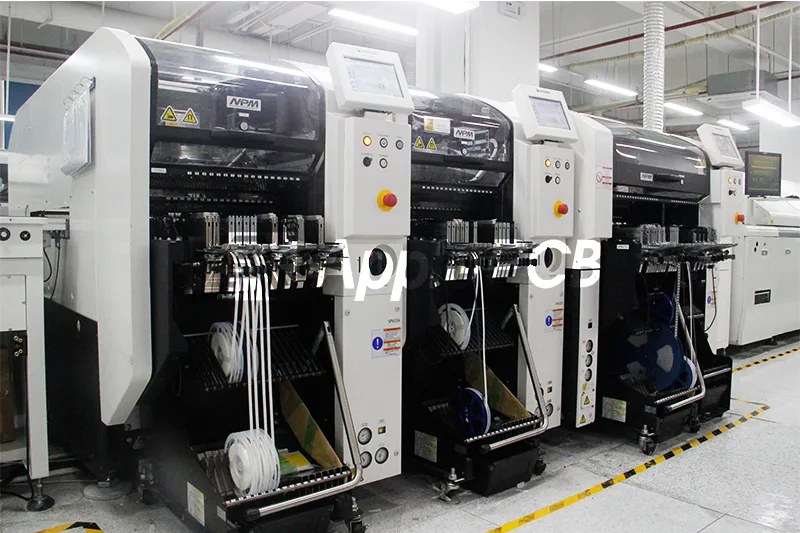
Depending on your hardware's end application and its tolerance for failure, a factory's quality assurance routing generally falls into one of two cost structures:
- Basic Inspection: This tier relies primarily on manual visual inspection, stereomicroscope checks, and basic functional bench testing. Because it requires minimal specialized equipment or programming overhead, it only adds an average of $0.10 to $2.00 per board to your invoice. This approach is highly effective for catching glaring errors like completely missed solder joints, obvious solder bridging, or inverted components. It is the ideal, budget-conscious choice for non-core consumer electronics prototypes built purely as a basic proof of concept (PoC).
- Advanced Quality Assurance: This comprehensive tier incorporates Automated Optical Inspection (AOI), In-Circuit Testing (ICT), and automated X-ray inspection for hidden bottom-terminated joints.
The equipment depreciation, fixture fabrication, and custom programming costs for these methods are significantly higher, requiring dedicated engineering hours to configure test vectors and optical algorithms. While these advanced steps increase your upfront prototyping unit cost, they reliably catch microscopic, hidden defects that human eyes cannot see. For high-reliability sectors like medical devices, automotive electronics, or aerospace systems where a field failure is not an option, this upfront investment pays for itself by completely eliminating field risk.
Lead Time
In manufacturing, time is a highly tangible cost. The flexibility of your delivery schedule dictates how the factory optimizes its production floor and shifts its manufacturing assets.
- Standard Lead Time (7 to 14 days): This represents the ideal operational rhythm for the factory floor. With this timeframe, the fabricator has enough buffer to verify component kit completeness, fine-tune pick-and-place efficiency, and panelize similar low-volume prototype runs together on a single manufacturing frame. This predictable workflow minimizes machine downtime and eliminates wasted labor hours, keeping the baseline assembly quote as low as possible.
- Quick-Turn / Expedited Orders (2 to 3 days): If a project schedule demands that the factory force an urgent prototype run through the line, that operational disruption hits the quote immediately. To execute a fast-turn assembly, the supervisor must break the existing production schedule and may even pause a high-volume run already on the line to free up the pick-and-place and reflow systems. The added expense of technician overtime, machine teardown and re-tooling penalties, and premium air express shipping costs are all added to your invoice. On the assembly floor, these quick-turn prototype runs typically incur a 10% to 30% expedite premium over standard assembly rates.
Final Thoughts
When you break down a prototyping or production budget, the total cost of bringing a populated circuit board to life follows a straightforward formula:
Total PCBA Cost = Bare Board Fabrication + Component Sourcing + Assembly Labor + Tooling & Test Overhead
Many hardware teams try to manage this formula by splitting the work among multiple vendors—using Vendor A for bare boards, sourcing components internally, and hiring Vendor B for pure contract assembly. This fragmented approach fragments your budget. It racks up hidden logistics fees, handling costs, and administrative delays. Worse, if you run into an assembly defect or an incorrect component footprint, you find yourself caught in a vendor finger-pointing match where no one takes responsibility.
Opting for a full turnkey assembly service remains the industry's great rule for cutting production costs, locking down quality, and accelerating time-to-market.
ApplePCB eliminates vendor management headaches. We deliver a completely closed-loop, turnkey service that spans bare board fabrication, global component sourcing, high-precision SMT/THT mixed assembly, and rigorous automated inspection (AOI and X-ray). By handing your hardware supply chain over to a single unified vendor, you eliminate multi-channel markups, cut out logistics overhead, and ensure a smooth path from Gerber files to a finished product.